
Living in the Lonsdale Corridor: A Complete Guide to North Vancouver's Urban Core

The Lonsdale Corridor is North Vancouver's urban core: nine distinct sub-areas running from the SeaBus terminal at the waterfront up the slope toward the foothills, connected by a single commercial spine that has shaped the North Shore since the early 1900s. It is the most transit-connected, the most walkable, and the most housing-diverse part of North Vancouver. At the bottom, you will find high-density condos and townhomes within walking distance of the Shipyards District and the 12-minute SeaBus crossing to downtown Vancouver. At the top, you will find established detached homes on quieter streets with mountain views and mature landscaping. In between, every property type and price point the North Shore offers.
This guide covers all nine sub-areas in the Lonsdale Corridor area: what each one offers, who it suits, what it costs, and how to evaluate the trade-offs between them. Whether you are a first-time buyer looking at condos in Lower Lonsdale, a family searching for a detached home in Upper Lonsdale, or a downsizer exploring the townhome options in Central Lonsdale, this is the starting point for understanding the corridor as a whole. For a broader overview of all North Vancouver neighbourhoods, see Living in North Vancouver.
Key Takeaways
- The Lonsdale Corridor contains 9 sub-areas with fundamentally different characters, from the urban waterfront density of Lower Lonsdale to the quiet, master-planned cul-de-sacs of Tempe. Understanding which sub-area matches your priorities is the first and most important step.
- Housing transitions from condo-heavy at the bottom to detached-dominant at the top. Condos and townhomes concentrate in Lower Lonsdale, Harbourside, and Central Lonsdale. Detached homes dominate in Boulevard, Upper Lonsdale, Hamilton, Calverhall, and Tempe.
- The SeaBus creates a measurable price premium in the lower corridor. Properties within walking distance of the Lonsdale Quay terminal command higher per-square-foot pricing than comparable units further up the slope, reflecting the 12-minute transit connection to downtown Vancouver.
- The corridor spans two municipalities: the City of North Vancouver (Lower Lonsdale, Harbourside, Central Lonsdale, Boulevard, Upper Lonsdale, Mosquito Creek) and the District of North Vancouver (Hamilton, Calverhall, Tempe). Zoning, permits, property taxes, and bylaws differ between the two.
- Price ranges span from approximately $600,000 for a condo in Lower or Central Lonsdale to $2.8M+ for a detached home in Boulevard or Upper Lonsdale. The corridor offers one of the broadest ranges of entry points on the North Shore.
What Is the Lonsdale Corridor?
"Lonsdale" is three things at once in North Vancouver. It is a street: Lonsdale Avenue, which runs from the waterfront at Lonsdale Quay straight up the hill toward 29th Street and beyond. It is a commercial district: the shops, restaurants, medical offices, and services that line the avenue and its surrounding blocks, forming the closest thing the North Shore has to a traditional main street. And it is a real estate area: a grouping of nine MLS sub-areas that share the Lonsdale corridor as their commercial and geographic anchor.
The boundaries of the area are defined by geography more than by municipal lines. The bottom is the Burrard Inlet waterfront, where the SeaBus terminal at Lonsdale Quay connects the North Shore to downtown Vancouver. The top, roughly at 29th Street, is where the commercial corridor gives way to the more residential, forested neighbourhoods of the upper North Shore. To the west, Mosquito Creek and MacKay Creek form a natural boundary. To the east, Hamilton and Calverhall mark the transition toward Lynn Valley and the District's eastern residential areas.
What makes the Lonsdale Corridor distinctive as a real estate area is the way housing type transitions with elevation. The waterfront is dominated by mid-rise and high-rise condos and newer townhome developments in Lower Lonsdale and Harbourside. Moving up the slope through Central Lonsdale, the mix shifts to a blend of older low-rise condos, newer mid-rise developments, and some townhomes alongside the commercial corridor. Above that, in Boulevard, Upper Lonsdale, Hamilton, Calverhall, and Tempe, detached homes on traditional residential lots become the dominant housing form. This gradient means a buyer can move from one sub-area to the next and find a fundamentally different property type, price point, and lifestyle, all within a 10-minute drive of the same commercial corridor.
The corridor also sits at the intersection of two municipalities. The lower and central portions fall within the City of North Vancouver (CNV), while the upper eastern pockets, including Hamilton, Calverhall, and Tempe, fall within the District of North Vancouver (DNV). This distinction matters for zoning, building permits, property taxes, and local bylaws. See the FAQ section for more on what this means for buyers.
The 9 Sub-Areas at a Glance
Lower Lonsdale
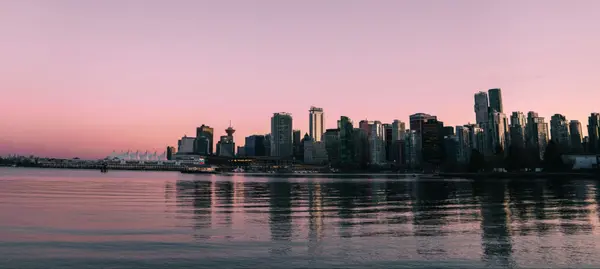
The most urban neighbourhood on the North Shore. Lower Lonsdale is defined by the Shipyards District, the SeaBus terminal at Lonsdale Quay, the Polygon Gallery (opened 2017 at 101 Carrie Cates Court), and a waterfront seawall that connects the entire harbourfront. Housing is predominantly condos and townhomes in mid-rise and high-rise buildings, with new developments continuing to add inventory. Walk Scores in the low-to-mid 80s make this one of the most walkable areas in all of North Vancouver. The typical buyer here is a professional, a couple, or a downsizer who prioritises transit access, restaurants, and the ability to walk to daily errands without a car. Density is the highest on the North Shore, and the energy of the neighbourhood reflects that. For a detailed guide, see Living in Lower Lonsdale.
Harbourside
Harbourside is a newer waterfront mixed-use development immediately west of Lower Lonsdale, built on former industrial land along the harbour. The housing stock is relatively recent compared to other parts of the corridor, consisting primarily of condos and townhomes in purpose-built developments with harbour and mountain views. Harbourside appeals to buyers who want the waterfront proximity and transit convenience of Lower Lonsdale but in newer construction with contemporary finishes and building systems. The area continues to evolve as development sites are completed, and it functions as an extension of the Lower Lonsdale lifestyle with its own distinct identity.
Central Lonsdale
Central Lonsdale is the geographic and functional centre of the corridor. It has the broadest housing mix of any sub-area: older low-rise condos from the 1970s and 1980s, newer mid-rise concrete developments, townhomes, and detached homes on the side streets above and below the commercial strip. Lions Gate Hospital and its surrounding medical area anchor the eastern side. The new Harry Jerome Recreation Centre, opening in late July 2026, will add a major community amenity. The City of North Vancouver's Lonsdale Great Street Plan, designed by Gehl and endorsed by Council in April 2026, envisions a long-term transformation of the commercial corridor into three distinct Character Areas: a Civic Heart around City Hall, a Village Centre near 15th Street, and a Gateway at the southern approach. Central Lonsdale is the pragmatic choice: close to everything, well-served by transit along the corridor, and offering the widest range of price points. For a detailed guide, see Living in Central Lonsdale.
Boulevard
Boulevard is one of North Vancouver's most distinctive residential neighbourhoods, centred on Grand Boulevard, a wide, heritage parkway that was originally designed in the early 1900s to attract prominent families to the North Shore. The original development company divided the land into large double lots with minimum construction value requirements, and the result is a living timeline of 20th-century housing: Arts and Crafts homes from the 1910s and 1920s (several with heritage plaques maintained by the North Shore Heritage Preservation Society), post-war bungalows from the 1940s and 1950s, and modern custom builds on redeveloped lots. Grand Boulevard Park, which runs the length of the parkway, originally served as one of three routes for the North Vancouver streetcar system. Today it features tennis courts, a soccer pitch, and Loutet Park Farm. The typical buyer is someone drawn to character, heritage architecture, tree-lined streets, and proximity to the Lonsdale commercial corridor without living directly on it.
Upper Lonsdale
Upper Lonsdale is the family-oriented detached-home segment of the corridor. Properties here sit at higher elevations, offering mountain and, in some cases, city and harbour views. Lots tend to be larger than in the lower corridor, with mature landscaping, established gardens, and a quieter residential character. Housing ranges from mid-century homes (1950s to 1970s) to modern rebuilds. The neighbourhood is within the Lonsdale commercial corridor's gravitational pull but removed from the density and activity of Lower and Central Lonsdale. Buyers here are typically families who want the Lonsdale corridor's amenities within a short drive but prefer the space, privacy, and pace of a residential street.
Hamilton
Hamilton occupies the eastern edge of the corridor, where the City of North Vancouver transitions into the District. It is an older, quieter residential area with a mix of post-war homes and some newer construction on redeveloped lots. Hamilton does not have a commercial centre of its own and relies on the Lonsdale corridor and, to a lesser extent, the Lynn Valley town centre for shopping and services. The neighbourhood appeals to buyers who want a more affordable entry into detached home ownership in the corridor area without the premium that comes with Boulevard or Upper Lonsdale addresses. Proximity to the Trans-Canada Highway provides commute options east toward the Ironworkers Memorial Bridge.
Mosquito Creek
Mosquito Creek is a smaller pocket on the western edge of the corridor, situated along the Mosquito Creek greenway near Marine Drive. The housing stock is varied: older single-family homes from the 1970s and 1980s, townhome developments, and some condo buildings. The Mosquito Creek trail system links the neighbourhood to Delbrook and Forest Hills to the north, providing a green corridor that connects the lower and upper parts of the North Shore. Mosquito Creek appeals to buyers seeking a quieter, less dense alternative to Lower and Central Lonsdale at a more moderate price point, while maintaining proximity to Marine Drive transit and the commercial amenities of the lower corridor.
Calverhall
Calverhall sits between the Lonsdale corridor and Lynn Valley, offering a residential character that borrows from both. The housing stock is predominantly detached homes built in the 1960s and 1970s on larger lots, with tree-lined streets and a neighbourhood feel that is noticeably quieter than Central Lonsdale a few blocks to the west. Many properties offer renovation potential, and the larger lot sizes accommodate additions and secondary suites more readily than the tighter lots in the lower corridor. Calverhall attracts families and buyers willing to invest in renovation who want the benefits of a central location without the price premium of Boulevard or the density of Central Lonsdale. Detached homes typically sell in the $1.3M to $1.9M range.
Tempe
Tempe is the corridor's most discreet sub-area. A master-planned neighbourhood developed primarily in the 1980s, it sits within the District of North Vancouver and is almost exclusively single-family homes. What distinguishes Tempe is its uniformity and its layout: flat, quiet, tree-lined streets and cul-de-sacs with homes that typically exceed 3,000 square feet, many with four bedrooms on the upper level. The streetscapes are cohesive, the lots are well-maintained, and the overall feel is more planned suburban neighbourhood than the organic, mixed-era character of most North Vancouver areas. Tempe flies under the radar because listings are infrequent and the neighbourhood does not have a commercial identity, but buyers who discover it tend to recognise immediately what makes it distinctive. Detached homes typically start at $2.1M and move upward from there.
Price Ranges by Sub-Area
The following table provides typical price ranges for the most commonly traded property types in each sub-area. These are approximate ranges based on recent market activity and should be treated as a starting point for understanding relative positioning, not as current valuations for any specific property.
| Sub-Area | Condo | Townhome | Detached |
|---|---|---|---|
| Lower Lonsdale | $600K to $1.1M | $1.1M to $1.6M | Limited inventory |
| Harbourside | $650K to $1.2M | $1.1M to $1.5M | N/A |
| Central Lonsdale | $550K to $1.2M | $950K to $1.5M | $1.6M to $2.4M |
| Boulevard | Limited inventory | Limited inventory | $1.8M to $2.8M |
| Upper Lonsdale | Limited inventory | $1.0M to $1.4M | $1.9M to $2.6M |
| Hamilton | Limited inventory | Limited inventory | $1.4M to $2.0M |
| Mosquito Creek | $550K to $950K | $900K to $1.3M | $1.4M to $1.8M |
| Calverhall | Limited inventory | Limited inventory | $1.3M to $1.9M |
| Tempe | N/A | N/A | $2.1M+ |
Ranges reflect typical market activity as of spring 2026. Actual prices vary by building age, condition, floor level, view exposure, lot size, and market conditions at the time of sale. For current pricing in any sub-area, browse active listings or review recent sales. For a broader discussion of how condos, townhomes, and detached homes compare as ownership experiences, see Condo vs. Townhome vs. Detached.
The SeaBus and Commuting Advantage
The SeaBus is the defining transit asset of the Lonsdale Corridor and the single largest factor in the price premium that Lower Lonsdale commands over other North Vancouver neighbourhoods. The crossing from Lonsdale Quay to Waterfront Station in downtown Vancouver takes 12 minutes, operates every 10 to 15 minutes during peak hours, and connects directly to the SkyTrain network (Expo, Canada, and Millennium Lines) and the West Coast Express. For buyers who commute to downtown Vancouver, the SeaBus provides a level of reliability and speed that bridge commuting cannot match during peak traffic.
The transit advantage diminishes with distance from the terminal. Properties within a 10-minute walk of Lonsdale Quay (roughly Lower Lonsdale and parts of Harbourside) carry the strongest premium. Central Lonsdale is served by frequent bus routes along Lonsdale Avenue that connect to the Quay, adding 10 to 15 minutes to the door-to-door commute. Upper Lonsdale, Boulevard, and the eastern sub-areas are more car-dependent, though bus service along Lonsdale Avenue and the Trans-Canada Highway provide alternatives. For a comprehensive analysis of commuting options from the North Shore, including bridge traffic, transit frequency, and commute time comparisons, see Commuting from the North Shore.
The Price Gradient: There is a measurable relationship between elevation (distance from the SeaBus) and per-square-foot condo pricing in the Lonsdale Corridor. As a general pattern, condo prices per square foot are highest in Lower Lonsdale and Harbourside, moderate in Central Lonsdale, and lower in Mosquito Creek. This gradient reflects the transit premium, walkability scores, and view exposure (harbour-facing units in the lower corridor command the strongest prices). Buyers who prioritise space over proximity can find meaningfully more square footage at the same price by moving a few blocks up the slope.
Exploring the Lonsdale Corridor?
Nine sub-areas, nine different experiences. If you want help narrowing down which pocket fits your priorities and budget, reach out anytime.
Get in TouchSchools in the Lonsdale Corridor
The Lonsdale Corridor falls within School District 44 (North Vancouver), which operates 26 elementary schools (with Cloverley opening in September 2026) and 7 secondary schools using a Family of Schools model that groups elementary and secondary catchments together. Key schools serving the corridor include Ridgeway Elementary (Lower Lonsdale area), Queen Mary Elementary, Queensbury Elementary, Larson Elementary, and Brooksbank Elementary. Secondary students in the lower and central corridor are typically served by Carson Graham Secondary, which offers an International Baccalaureate (IB) programme, and Sutherland Secondary. Students in the upper and eastern portions may fall within the Argyle or Windsor catchments depending on address.
French Immersion is available at several schools in the corridor, with entry points at kindergarten (Early French Immersion) and Grade 6 (Late French Immersion). Catchment boundaries and programme availability are determined by home address, and SD44 adjusts boundaries periodically based on enrolment. Confirm the specific catchment for any property you are considering directly with SD44 before making a purchasing decision based on school assignment. For a broader discussion of how schools factor into neighbourhood decisions, see Best Neighbourhoods for Families.
Walkability and Lifestyle
The lower and central portions of the Lonsdale Corridor are among the most walkable areas on the entire North Shore. Lower Lonsdale's Walk Score typically sits in the mid-80s, which is exceptional for a municipality where most neighbourhoods score in the 40s and 50s. Central Lonsdale, with its commercial strip of grocery stores, pharmacies, restaurants, cafes, and professional services, provides the kind of walkable daily-needs access that is more commonly associated with urban Vancouver neighbourhoods than with the North Shore.
The Shipyards District is the cultural anchor of the lower corridor. The Shipyards Night Market runs on Friday evenings during the summer, drawing thousands to the waterfront for food vendors, live music, and community gathering. The Shipyards Summer Sessions bring outdoor concerts to the area on Saturday evenings in July and August. The Polygon Gallery, a contemporary photography and art gallery that opened in 2017, hosts rotating exhibitions and outdoor Deckchair Cinema screenings during the summer months. Lonsdale Quay Public Market, with over 80 shops and food vendors, functions as both a transit hub and a daily shopping and dining destination. Beyond the waterfront, the Lonsdale corridor itself offers a density of independent restaurants, coffee roasters, breweries, and retail that is unmatched elsewhere on the North Shore.
The walkability decreases as you move up the corridor. Boulevard and Upper Lonsdale are residential in character, with access to the commercial corridor by a short drive or a bus ride down the hill. Calverhall, Hamilton, and Tempe are quieter still, offering the residential calm that some buyers specifically seek in exchange for the walkability that others prioritise. The corridor accommodates both preferences within a remarkably compact geography.
When the Lonsdale Corridor May Not Be the Right Fit
- You want immediate trailhead access. The corridor is urban and residential, not wilderness-adjacent. If starting your morning run from a forest trail is a priority, Lynn Valley, Deep Cove, or Edgemont place you closer to the trail network.
- You want larger lots and a rural feel. The corridor's lots are standard urban and suburban sizes. For acreage, privacy, and a more rural character, look east toward Indian River, Seymour NV, or Deep Cove.
- You need a condo under $500,000. While inventory at this price point does appear occasionally in Central Lonsdale and Mosquito Creek (typically older, smaller units), it is not reliable. Lynnmour may offer more consistent options at this level.
- You want to avoid urban noise and density. Lower and Central Lonsdale are the North Shore's densest neighbourhoods. If density is a concern, the upper corridor sub-areas (Boulevard, Upper Lonsdale, Calverhall, Tempe) offer a residential alternative, or consider neighbourhoods outside the corridor entirely.
How the Lonsdale Corridor Moves in Different Markets
The Lonsdale Corridor does not behave as a single market. The condo-heavy lower corridor and the detached-dominant upper corridor respond differently to shifts in interest rates, inventory levels, and buyer sentiment.
Condos in Lower Lonsdale, Harbourside, and Central Lonsdale are the most volatile segment. They are the first to feel the impact of rising interest rates (because condo buyers are more rate-sensitive and often carry higher loan-to-value ratios), and they are the first to recover when rates decline and first-time buyers re-enter the market. In the current spring 2026 market, the condo segment across Metro Vancouver is experiencing elevated inventory and softer pricing, which gives buyers more selection and negotiating position than they have had in several years. For the most recent data, see the North Shore Market Update.
Detached homes in Boulevard, Upper Lonsdale, and Tempe are the most resilient segment. Inventory is structurally limited (there are only so many lots), demand from families and long-term holders is consistent, and the land value component provides a floor that the condo market does not have. These properties tend to hold value in downturns and appreciate more steadily in recoveries.
Townhomes occupy the middle ground: more stable than condos, more accessible than detached, and increasingly sought after by families, downsizers, and move-up buyers who are priced out of the detached market. For a broader discussion of how these property types compare, see Condo vs. Townhome vs. Detached.
Frequently Asked Questions
How do I choose between Lower, Central, and Upper Lonsdale?
The choice comes down to three trade-offs: density vs. space, walkability vs. quiet, and condo/townhome vs. detached. Lower Lonsdale offers the highest walkability and transit access but the smallest units and the most density. Central Lonsdale provides a broader housing mix and strong daily-needs walkability at a slightly lower price per square foot. Upper Lonsdale offers detached homes with more space and a residential feel but requires a car or bus for most errands. Start by deciding which trade-off matters most, and the right sub-area will become clear. For individual neighbourhood deep-dives, see the guides for Lower Lonsdale and Central Lonsdale.
Is the Lonsdale Corridor pet-friendly?
It depends on the property type and the specific building. Detached homes in Boulevard, Upper Lonsdale, Calverhall, Hamilton, and Tempe have no restrictions on pets. For condos and townhomes in the lower and central corridor, pet policies are governed by the individual strata corporation's bylaws. Most buildings in the area permit at least one pet with size or breed restrictions, but some older buildings have more restrictive bylaws. Review the bylaws during the subject period before committing to a strata purchase if pet ownership is a priority. Note that BC legislation invalidated all rental-restriction bylaws in November 2022, but pet restrictions remain enforceable.
What is the difference between the City and District of North Vancouver?
North Vancouver contains two separate municipalities: the City of North Vancouver (CNV) and the District of North Vancouver (DNV). Within the Lonsdale Corridor, Lower Lonsdale, Harbourside, Central Lonsdale, Boulevard, Upper Lonsdale, and Mosquito Creek fall within the City. Hamilton, Calverhall, and Tempe fall within the District. The distinction affects property tax rates, zoning bylaws, building permit processes, garbage collection schedules, recreation programmes, and local governance. Both municipalities have their own council, mayor, and planning departments. When evaluating a property, confirm which municipality it falls within, as this determines which set of bylaws and services apply. For renovation-specific implications, see the renovation guide.
How easy is the SeaBus commute really?
The SeaBus crossing itself takes 12 minutes, with departures every 10 to 15 minutes during peak hours. From Waterfront Station on the downtown side, you connect directly to the Expo, Canada, and Millennium SkyTrain lines. The realistic door-to-door commute from a Lower Lonsdale condo to a downtown Vancouver office is 25 to 40 minutes, depending on your walking distance to the terminal and your final destination downtown. From Central Lonsdale, add 10 to 15 minutes for the bus connection down to the Quay. The SeaBus is reliable, weather-independent (it operates in all conditions), and avoids the bridge traffic that makes driving unpredictable during peak hours. For a full commute comparison, see Commuting from the North Shore.
Are there family-friendly pockets in the corridor?
Yes. Boulevard and Upper Lonsdale are the most established family neighbourhoods, with detached homes, larger lots, mature trees, and proximity to parks and elementary schools. Calverhall and Tempe offer a similar family-oriented character with a quieter, more residential feel and larger home sizes (Tempe in particular, with 3,000+ square foot homes that commonly include four bedrooms upstairs). Even Central Lonsdale serves families well, particularly in the townhome and ground-level condo segments, with the Harry Jerome Recreation Centre (opening July 2026) adding a significant family amenity. For a broader comparison of family-friendly North Vancouver neighbourhoods, see Best Neighbourhoods for Families.
What is the parking situation in Lower Lonsdale?
Street parking in Lower Lonsdale is limited and increasingly restricted, particularly near the Shipyards District and Lonsdale Quay, where time-limited and paid parking zones apply. Most residential buildings include at least one parking stall per unit (sometimes two), but this is not universal, especially in older buildings and smaller units. If you are buying in Lower Lonsdale, confirm the number and type of parking stalls included with the unit. If you are relying on street parking, test the availability at the times you would actually need it. Some buyers in the lower corridor choose to go car-free, relying on the SeaBus, bus network, car-sharing services, and walkable amenities for daily needs. For buyers who consider this approach, see Commuting from the North Shore for a realistic assessment of car-free viability.
Is the Lonsdale Corridor a good investment?
The corridor benefits from structural advantages that support long-term value: the SeaBus transit connection, the commercial density of the Lonsdale Avenue spine, the Lonsdale Great Street Plan's investment in public realm improvements, and the geographic constraint of being bounded by water, mountains, and established residential areas that limit new supply outside the existing footprint. That said, short-term market conditions affect different segments differently. Condos are more sensitive to interest rate cycles, while detached homes in the upper corridor tend to hold value more consistently. Your personal timeline, financial position, and use case (primary residence vs. investment) should guide the decision more than any generalised statement about the corridor's investment potential. This is not investment advice.
Finding Your Place in the Corridor
The Lonsdale Corridor is not one neighbourhood. It is nine, connected by a shared commercial spine and a geographic gradient that transitions from urban waterfront to established residential hillside within a few kilometres. The right sub-area depends on your priorities: transit access, walkability, space, privacy, budget, property type, and the lifestyle you want your home to support. What the corridor offers that few other parts of the North Shore can match is the ability to find all of these options within a single, coherent geography.
If you are beginning to explore the corridor, the most productive starting point is a conversation about what matters most to you. Browse current listings filtered by the sub-area that interests you, review recent sales for pricing context, or check the market snapshot for current conditions. You can also read what past clients have to say on the reviews page, or explore the broader North Vancouver guide for context on how the corridor fits within the municipality as a whole.
Start With a Conversation
Nine sub-areas, one corridor, and the right fit is personal. I am here to help you find it.
Message Paul FraserContent Note: Price ranges reflect typical market activity in the Lonsdale Corridor as of spring 2026, informed by Greater Vancouver REALTORS® benchmark data and recent sales. Ranges are approximate and vary by building, condition, lot size, and market conditions. SeaBus schedule and crossing time from TransLink. School information from School District 44 (North Vancouver); catchment boundaries should be verified directly with the district. Harry Jerome Recreation Centre opening timeline from the City of North Vancouver. Lonsdale Great Street Plan endorsed by Council April 2026, designed by Gehl. Grand Boulevard heritage information from the North Shore Heritage Preservation Society. City/District boundary information from the respective municipal websites. This guide is educational and does not constitute real estate or investment advice. For current listings, see active listings and recent sales. Sellers can request a home evaluation. Data last verified: May 2026.
Photo Credit: Adi K via Pexels
Homes for Sale in the Lonsdale Corridor
Categories
Recent Posts


GET MORE INFORMATION