
Living in Downtown Vancouver West: Coal Harbour, the West End, and English Bay
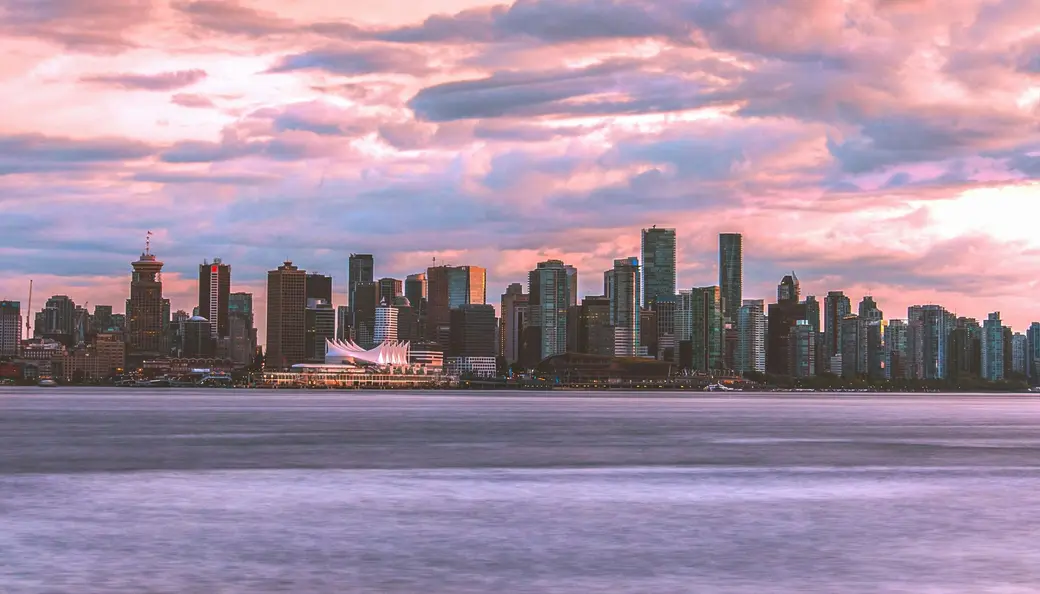
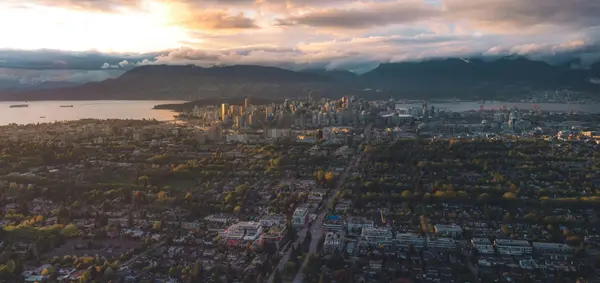
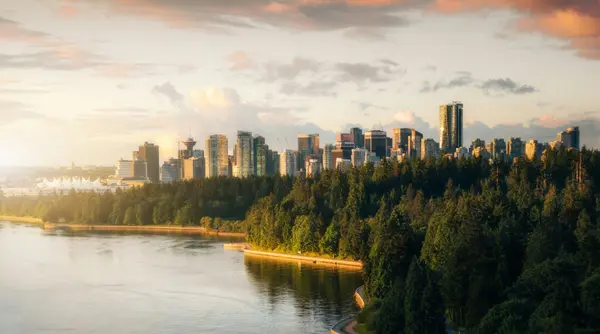
The western half of downtown Vancouver is defined by one extraordinary geographic feature: Stanley Park. The 405-hectare park occupies the tip of the peninsula, and the neighbourhoods that wrap around it benefit from a relationship with green space, waterfront, and natural beauty that is difficult to find in any other major city centre. Downtown Vancouver West encompasses Coal Harbour along the northern waterfront, the West End (including the Davie Village and Denman Street corridors), and the English Bay and Sunset Beach waterfront that defines the neighbourhood's southern edge.
Where Downtown Vancouver East (Yaletown, Gastown, Olympic Village) offers heritage character and newer eco-design, downtown west offers something different: the combination of Stanley Park's forest and beaches with genuinely urban living. The West End is one of the most densely populated residential areas in Canada, yet its residents are within a 10-minute walk of a 1,000-acre park, a 10-kilometre seawall, and multiple beaches. Coal Harbour provides a quieter, more premium waterfront experience with marina views and direct park access. Together, they represent the western side of Paul's downtown service area and a fundamentally different lifestyle from the North Shore.
Key Takeaways: Downtown Vancouver West
- Stanley Park is the anchor. The 405-hectare park with its 10-kilometre seawall, forest trails, beaches, and cultural attractions (Vancouver Aquarium, totem poles, Second Beach Pool) is the defining amenity of downtown west. No other downtown neighbourhood in Canada offers comparable green space at this scale.
- Coal Harbour is the premium, quieter option. Luxury high-rise condos along the northern waterfront with marina views, concierge services, and direct seawall access to Stanley Park. Over 95% of buildings are 5+ storeys. The neighbourhood developed primarily since the 1990s.
- The West End is one of Canada's most densely populated neighbourhoods (approximately 45,000 to 50,000 residents), yet it maintains a community feel through three distinct commercial streets: Robson (retail and shopping), Davie (the heart of Vancouver's 2SLGBTQIA+ community and Davie Village), and Denman (restaurants, shops, and the gateway to Stanley Park).
- English Bay and Sunset Beach provide the waterfront identity of the southern West End. English Bay Beach is one of Vancouver's most popular public beaches and hosts annual events including the Celebration of Light fireworks and the Polar Bear Swim (held since 1920).
- Housing is almost entirely strata condos, with building ages ranging from 1960s mid-rises to contemporary towers. Coal Harbour skews toward luxury new construction. The West End offers a broader range including older, more affordable buildings with character.
Neighbourhoods at a Glance
| Factor | Coal Harbour | West End |
|---|---|---|
| Character | Quiet, upscale, waterfront. Luxury towers, marina, convention centre. Developed since the 1990s from former industrial waterfront. | Dense, diverse, community-driven. One of the oldest residential neighbourhoods in Vancouver. Tree-lined streets, mix of old and new high-rises, art deco low-rises, and heritage homes. |
| Waterfront | Coal Harbour Seawall (north side, Burrard Inlet). Marina views, harbour seals, North Shore mountain panorama. | English Bay Beach, Sunset Beach (south and west side). Open ocean views, sunsets, direct beach access. |
| Stanley Park access | Direct. Walk or cycle onto the seawall from Coal Harbour into Stanley Park. | Direct. Denman Street leads to the park entrance. The seawall wraps from English Bay around the park. |
| Housing type | Luxury high-rise condos (over 95% are 5+ storeys). Some ground-level townhomes. 24-hour concierge is common. | Mix of older mid-rises (1960s to 1980s), newer high-rises, art deco low-rises, and some heritage conversions. Broader price range than Coal Harbour. |
| Commercial streets | Limited local retail. Restaurants and cafes along the seawall and adjacent blocks. Close to Robson Street and Alberni Street luxury retail. | Three major streets: Robson (retail/shopping), Davie (Davie Village, 2SLGBTQIA+ community hub, restaurants, nightlife), Denman (restaurants, shops, park gateway). |
| Transit | Walking distance to Burrard Station (Expo Line) and Waterfront Station. Bus routes along Georgia Street. | Bus routes along Robson, Davie, Denman, Georgia. Burrard Station and Vancouver City Centre Station within a 10 to 15 minute walk or short bus ride. |
| Price range | Higher. Luxury condos with harbour views, concierge, and premium amenities. | Broader. Older buildings offer more affordable entry points. Newer towers with views command premiums. Greater range of unit sizes and price levels. |
| Best for | Professionals, executives, retirees, and luxury buyers seeking quiet waterfront living with concierge services and Stanley Park access. | Young professionals, students, couples, downsizers, and community-oriented buyers who value walkability, diversity, beach access, and a vibrant neighbourhood feel. |
Coal Harbour: Luxury Waterfront on Burrard Inlet
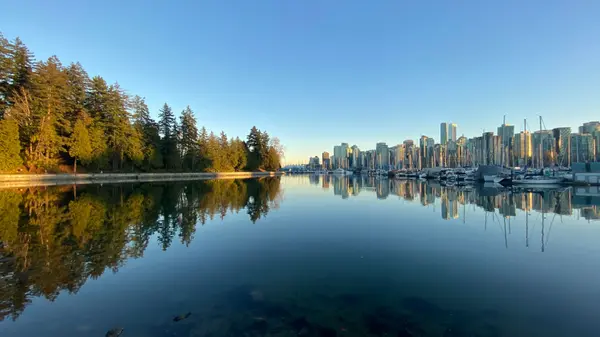
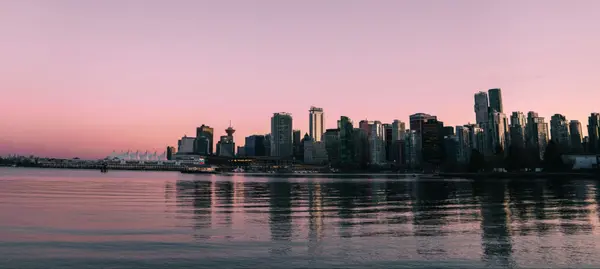
Coal Harbour occupies the northern waterfront of the downtown peninsula, between Stanley Park to the west and the Vancouver Convention Centre to the east. The area takes its name from the coal deposits that once lay beneath the harbour floor. For most of the 20th century, this stretch of waterfront was industrial: shipping, rail yards, and port operations. The residential transformation began in the 1990s, and today Coal Harbour is one of Vancouver's most exclusive residential addresses, characterised by glass-and-steel towers rising directly from the water's edge with views of the North Shore mountains, Stanley Park, and Burrard Inlet.
What Defines Daily Life in Coal Harbour
- The Coal Harbour Seawall: A waterfront pathway running from Stanley Park to the Convention Centre, lined with restaurants, public art, and marina docks. It connects seamlessly to the Stanley Park Seawall, providing a continuous walking and cycling route that extends around the entire park.
- The marina: One of the distinctive features of Coal Harbour is the marina, with recreational boats, yacht clubs (including the Royal Vancouver Yacht Club on the Stanley Park side), and the Harbour Air seaplane terminal, which provides float plane service to Victoria, Nanaimo, and the Gulf Islands.
- Stanley Park: Coal Harbour provides the most direct residential access to the park. Residents can walk from their building into the park's forest trails, past Lost Lagoon, and along the seawall within minutes.
- Coal Harbour Community Centre: A full-service community centre with fitness facilities, gymnasium, and programming for all ages.
- Canada Place and the Convention Centre: Adjacent to Coal Harbour, these landmarks host major events, the cruise ship terminal (April through October), and FlyOver Canada.
- Building character: Over 95% of Coal Harbour's residential buildings are 5+ storeys. Many feature 24-hour concierge, indoor pools, saunas, steam rooms, fitness centres, and rooftop amenity decks. Floor level, orientation (harbour vs. city), and building quality significantly affect pricing.
Local Insight: Coal Harbour is one of the quieter neighbourhoods in downtown Vancouver, which surprises many first-time visitors. Despite its proximity to the Convention Centre and the business district, the residential blocks have a calm, almost resort-like quality. This is by design: the buildings are set back from the waterfront, the seawall provides a buffer between the harbour and the street, and the overall density of commercial activity is lower than in the West End or Yaletown. For buyers who want the address, the views, and the park access without the energy and noise of a busier neighbourhood, Coal Harbour delivers that combination consistently.
The West End: Dense, Diverse, and Community-Driven
The West End is one of the oldest residential neighbourhoods in Vancouver and, with approximately 45,000 to 50,000 residents, one of the most densely populated areas in Canada. The City of Vancouver describes it as occupying the western portion of the downtown peninsula, bounded by water on three sides: English Bay to the south, Coal Harbour to the north, and Lost Lagoon and Stanley Park to the west. The neighbourhood's three primary commercial streets, Robson, Davie, and Denman, form a grid that gives the area its structure and its three distinct characters.
The Three Streets
- Robson Street: Vancouver's most well-known shopping street. International fashion, retail flagships, and dining. The eastern section (closer to Burrard) is more commercial and tourist-oriented. The western section (closer to Denman) transitions to a more local, residential feel.
- Davie Street (Davie Village): The heart of Vancouver's 2SLGBTQIA+ community. Rainbow crosswalks, Pride murals and flags, independent bars, restaurants, and the cultural institutions that have made this corridor a focal point for the community for decades. The annual Pride Parade starts here. Little Sister's Book and Art Emporium is a landmark independent bookstore specialising in 2SLGBTQIA+ literature.
- Denman Street: The gateway to Stanley Park. A charming, neighbourhood-scale commercial street with independent restaurants, cafes, ice cream shops, and retail. Denman runs directly to the park entrance and is the street most closely associated with the daily life of West End residents.
English Bay and the Beaches
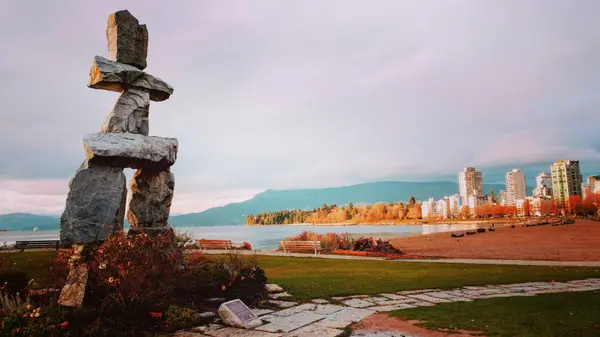
English Bay Beach (also known as First Beach) is the West End's primary public beach, located at the foot of Denman Street. It is one of the most popular beaches in Vancouver and the site of annual events including the Celebration of Light international fireworks competition and the Polar Bear Swim, held every January 1st since 1920. Sunset Beach, further east along the seawall, is quieter and connects to the Aquatic Centre and the False Creek ferry docks. Second Beach and Third Beach, within Stanley Park, provide additional waterfront access with less crowding.
What Defines Daily Life in the West End
- Extreme walkability. The West End is one of the most walkable neighbourhoods in Canada. Grocery, dining, shopping, transit, parks, and beaches are all within a 10-minute walk for most residents.
- Stanley Park access: The park's 10-kilometre seawall, forest trails, beaches, Lost Lagoon, and cultural attractions are all directly accessible from the West End.
- West End Community Centre: A full-service recreation facility with a pool, gym, fitness classes, and community programming for all ages.
- Diversity and inclusivity: The West End is one of the most diverse neighbourhoods in Vancouver, with a broad mix of young professionals, international students, long-term residents, seniors, and families. The 2SLGBTQIA+ community is deeply embedded in the neighbourhood's identity and daily life.
- Tree-lined residential streets: Despite the density, the residential streets between the commercial corridors are lined with mature trees and have a surprisingly calm, green character.
Considering Downtown Vancouver West?
Coal Harbour and the West End offer different takes on Stanley Park-adjacent living. If you want to explore what is available at different price points, reach out anytime.
Get in TouchHousing Across Downtown Vancouver West
As with Downtown Vancouver East, housing in downtown west is almost entirely strata condominiums. The key difference between the two sub-areas is the age range and pricing spread. Coal Harbour's stock is predominantly post-1990s luxury construction. The West End offers a much broader range, from 1960s concrete mid-rises (often with lower strata fees and larger unit sizes) to contemporary glass towers with premium views and amenities.
| Neighbourhood | Building Types | Building Age Range | Buyer Considerations |
|---|---|---|---|
| Coal Harbour | Luxury high-rise condos, some ground-level townhomes | Primarily 1990s to 2020s | Premium pricing reflects waterfront location, views, and building amenities (concierge, pool, gym). Floor level and orientation (harbour vs. city) significantly affect value. Strata fees in luxury buildings can be higher, reflecting premium amenity packages and insurance costs. Review strata documents and the depreciation report even in newer buildings. |
| West End | Older mid-rises (concrete), newer high-rises, art deco low-rises, heritage conversions | 1960s to present | The broadest price range in downtown west. Older buildings offer lower per-square-foot pricing and often larger units, but may have higher maintenance needs, fewer amenities, and older systems. Newer buildings offer modern finishes and views but at higher price points. Building age affects strata fees, maintenance outlook, and the depreciation report. The strata buying guide covers what to review. |
Browse current listings to see what is available in both areas, or view featured properties for highlights. For context on what properties have recently traded for, see recent sales. The April 2026 Market Update provides benchmark pricing by property type. For a comparison of how condo ownership works relative to other property types in BC, see Condo vs. Townhome vs. Detached.
Transit and Connectivity
| Neighbourhood | Nearest SkyTrain | Line | Key Connections |
|---|---|---|---|
| Coal Harbour | Burrard Station or Waterfront Station (both within walking distance) | Expo Line (Waterfront), Expo + Canada Line transfer at Burrard area | Downtown core, SeaBus to North Vancouver (12 min from Waterfront), SkyTrain to Burnaby and Surrey |
| West End | Burrard Station or Vancouver City Centre Station | Expo Line (Burrard), Canada Line (City Centre) | Downtown, YVR Airport (Canada Line, approximately 26 min), Richmond. Bus routes along Robson, Davie, Denman, and Georgia connect the neighbourhood internally and to adjacent areas. |
Both neighbourhoods are highly transit-connected, though neither has a SkyTrain station within the neighbourhood itself. Residents typically walk 10 to 15 minutes to the nearest station or take a short bus ride. The neighbourhood's strength is not station proximity; it is overall walkability. Most daily needs (grocery, dining, parks, beaches) are within walking distance, which reduces transit dependence for daily life. Transit is primarily needed for trips beyond the downtown peninsula.
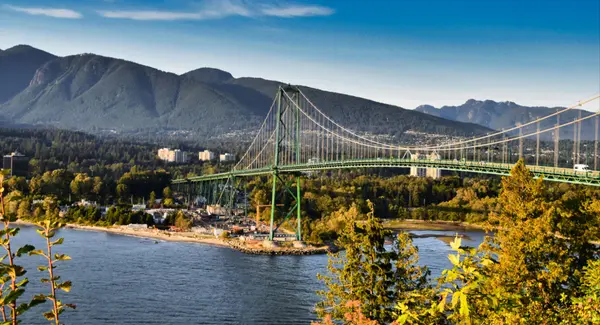
For buyers comparing downtown west to the North Shore, the Lions Gate Bridge provides a direct driving connection between the two areas. Denman Street leads to Georgia Street and the Stanley Park Causeway, which crosses the Lions Gate Bridge to North and West Vancouver. The drive is 15 to 35 minutes depending on traffic. The SeaBus from Waterfront Station (accessible from Coal Harbour on foot) provides the 12-minute crossing to Lower Lonsdale. For complete commuting details, see Commuting from the North Shore.
Who Downtown Vancouver West Is Best For
- Buyers who want Stanley Park as their backyard. No other urban neighbourhood in Vancouver provides this level of direct access to a 405-hectare park with beaches, forest trails, and a 10-kilometre seawall. If daily park access is a non-negotiable priority, downtown west is the address.
- Luxury buyers seeking waterfront views and concierge lifestyle. Coal Harbour provides the most premium residential experience in Vancouver, with harbour and mountain views, 24-hour concierge, and building amenities that rival high-end hotels.
- Young professionals and urban dwellers who value walkability, diversity, beach culture, and vibrant commercial streets. The West End provides all of these at price points that are more accessible than Coal Harbour.
- Downsizers from the North Shore or the suburbs who want to trade space and maintenance for walkability, transit access, and the convenience of having everything within a 10-minute walk.
- Members of the 2SLGBTQIA+ community who value living in or near Davie Village, one of the most established and visible queer communities in Canada.
Who It May Not Be Ideal For
- Families who need significant indoor space and outdoor yard access. Unit sizes in downtown west are generally smaller than in suburban or North Shore properties. There are no yards. Parks are the outdoor space, which works for some families but not all.
- Buyers who prefer nature-immersive outdoor access. Stanley Park is magnificent, but it is a manicured urban park. It is not the same experience as Lynn Canyon's temperate rainforest, Indian Arm's coastal wilderness, or the Grouse Grind. If backcountry-style outdoor access is important, the North Shore provides what downtown cannot.
- Buyers who want quiet residential streets with minimal foot traffic. The West End is dense and active. Robson, Davie, and Denman carry significant pedestrian and commercial traffic. Even the residential streets experience the ambient activity of a high-density urban environment.
- Buyers seeking detached homes or townhomes. These property types do not exist in downtown west. If freehold ownership, a yard, or a private entrance are priorities, the North Shore offers what downtown cannot. See the families guide for neighbourhood options.
Good-to-Know: The Realities of Living in Downtown West
- English Bay events attract significant crowds. The Celebration of Light fireworks (summer) and the Polar Bear Swim (January 1st) bring tens of thousands of visitors to the neighbourhood. Residents learn to plan around these events or embrace them as part of the neighbourhood's identity.
- Building age matters enormously in the West End. A 1965 concrete building and a 2015 glass tower are fundamentally different ownership experiences in terms of strata fees, maintenance outlook, soundproofing, amenities, and energy efficiency. In the West End more than most neighbourhoods, the building you choose is as important as the neighbourhood itself.
- Parking is limited and expensive. Many older West End buildings have limited underground parking. Street parking is permit-based and often difficult to find. Some residents choose not to own a car, relying on walkability, transit, and car-share services. If you own a vehicle, confirm parking arrangements before purchasing.
- Cruise ship season brings activity to Coal Harbour. From April through October, large cruise ships dock at Canada Place, adjacent to Coal Harbour. This brings visitor traffic but also adds maritime energy to the harbour views.
- The Lions Gate Bridge is your connection to the North Shore. For residents of downtown west who work or have connections on the North Shore, the Lions Gate Bridge (accessed via the Stanley Park Causeway) is the most direct route. See the commuting guide for bridge details and traffic patterns.
Frequently Asked Questions
What is the difference between Coal Harbour and the West End?
Coal Harbour is a newer (post-1990s), luxury-oriented waterfront neighbourhood on the north side of the peninsula with harbour and mountain views, marina access, and a quiet residential character. The West End is one of Vancouver's oldest and most densely populated neighbourhoods, centred on three commercial streets (Robson, Davie, Denman) with English Bay beaches, Stanley Park access, and a broader range of building ages and price points. Coal Harbour is quieter and more premium. The West End is more diverse, more active, and more community-driven.
How close is Stanley Park?
Both Coal Harbour and the West End provide direct access to Stanley Park. From Coal Harbour, the seawall connects directly into the park. From the West End, Denman Street leads to the park entrance. Most residents of either neighbourhood can walk to the park in under 10 minutes. The park's 10-kilometre seawall, forest trails, beaches (Second Beach, Third Beach), Lost Lagoon, and cultural attractions are all accessible on foot.
What types of housing are available?
Almost exclusively strata condominiums. Coal Harbour offers luxury high-rises (some with ground-level townhomes). The West End offers a mix of older concrete mid-rises, newer glass towers, art deco low-rises, and some heritage conversions. For details on the strata ownership process in BC, see the strata buying guide. Browse current listings filtered by area to see available inventory.
Is downtown west good for families?
It can work for families who prioritise walkability, beach access, and park proximity over indoor space and yards. Stanley Park, English Bay, community centres, and schools (within the Vancouver School Board) serve the area. However, unit sizes tend to be smaller than in the North Shore or suburban areas, and there is no yard space. For families who prioritise space and nature-immersive outdoor access, the North Shore offers a different set of options. See The Best North Vancouver Neighbourhoods for Families for a detailed comparison.
How does downtown west compare to the North Shore?
Downtown west provides the strongest walkability, the most diverse dining and cultural scene, and eliminates bridge commuting. The North Shore provides detached homes, townhomes, forest and mountain trail access, quieter residential streets, and the kind of space that downtown cannot offer. For many buyers, the choice comes down to whether they value urban convenience and park access (downtown west) or natural environment, space, and residential character (North Shore). Paul has lived in both and can help you evaluate the trade-offs.
How do I get to the North Shore from downtown west?
The Lions Gate Bridge (accessed via the Stanley Park Causeway from Georgia Street and Denman) connects downtown west directly to the North Shore (15 to 35 minutes depending on traffic). The SeaBus from Waterfront Station provides a 12-minute crossing to Lonsdale Quay. For full commuting details and bridge traffic data, see Commuting from the North Shore.
Explore Downtown Vancouver West
Downtown Vancouver West offers a lifestyle built around Stanley Park, the seawall, English Bay, and the dense, walkable urban fabric of the West End and Coal Harbour. It is a different proposition from the North Shore: less space, more convenience; less forest, more beach; less quiet, more energy. For buyers who are drawn to that combination, it delivers it consistently and at a level that is unique in Canada. If you are exploring Downtown Vancouver West and want to discuss which neighbourhood, building, and price range fit your priorities, I am happy to help. You can also read what past clients have to say on the reviews page, check the market snapshot, or browse current listings.
Find Your Place in Downtown Vancouver West
From Coal Harbour luxury to West End character, I can help you navigate the downtown market with clarity.
Message Paul FraserContent Note: West End neighbourhood details from the City of Vancouver and Destination Vancouver. Coal Harbour details from community and tourism sources. Stanley Park details from Vancouver Park Board. Transit information from TransLink. Population estimate (approximately 45,000 to 50,000 West End residents) from community planning sources. No specific pricing data is quoted. For current listings and pricing, see active listings and recent sales. For market context, see the April 2026 Market Update. Sellers can request a home evaluation or visit the seller services page. Data last verified: May 2026.
Photo Credit: Jay Ngai via Pexel
Newest Listings in Downtown Vancouver West
Categories
Recent Posts

GET MORE INFORMATION